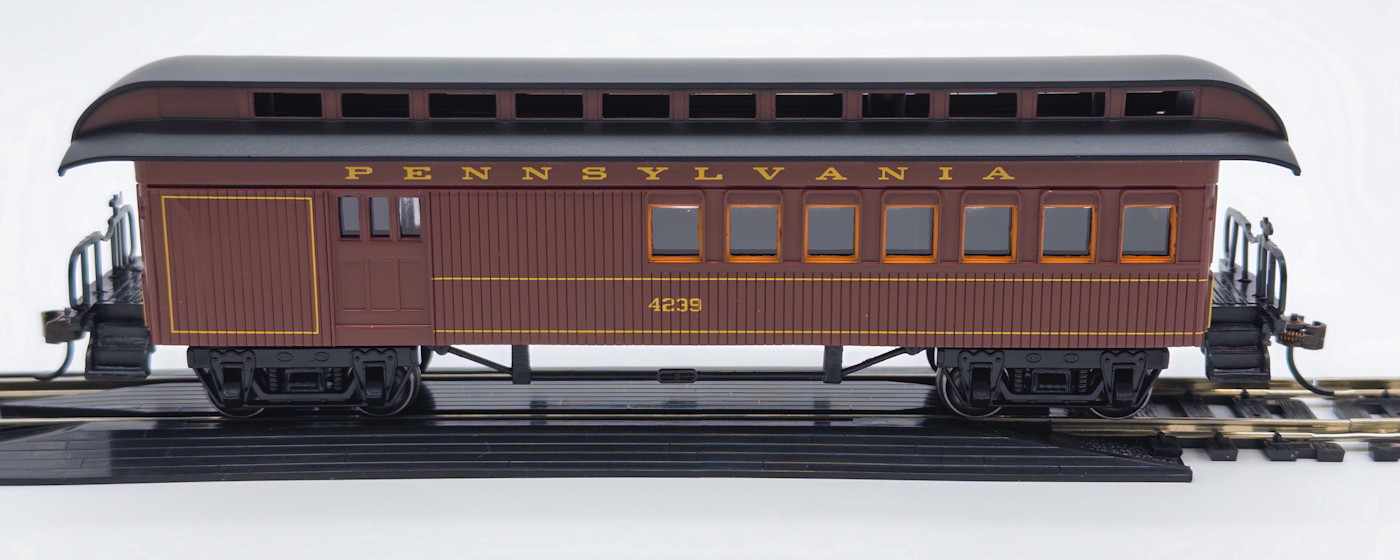
Passenger - Combination Car
PRR #4239
Wooden "combine" rail cars with clerestory roofs were a common type of passenger car in North America from roughly the 1860s through the early 20th century. They featured a multi-section interior, wooden construction, and a raised central roofline designed to provide ventilation and light. Key features: * Combine cars: These were multi-purpose cars that "combined" multiple functions into a single vehicle. They typically included a passenger coach section with seats, as well as a baggage area for luggage and a mail section for sorting postal items. They were particularly useful on lightly-trafficked branch lines where a separate baggage or postal car wasn't necessary. * Clerestory roof: This distinctive roof design featured a raised section with windows or vents, running down the center of the car. * Ventilation: The clerestory helped cool the car in the pre-air conditioning era. As hot air rose to the ceiling, the vent windows would pull it out, drawing in cooler air from below. * Light: The extra windows provided more natural light in the days before reliable electric lighting. * Evolution: The design was in widespread use from about 1860 until the 1930s, eventually replaced by the semi-elliptical or "Harriman" roof as sealed, air-conditioned steel cars became standard. For passenger travel, wooden cars with clerestory roofs gave way to all-steel "heavyweight" cars around the turn of the 20th century. This transition was prompted by a combination of safety concerns and advancing technology. The high number of fatalities in train wrecks involving wooden cars spurred the industry to adopt all-steel construction, which offered greater strength and passenger protection. While some wooden cars were retrofitted with steel underframes, the complete changeover was viewed as the safest option. The shift from wood to steel occurred over many decades. While major intercity routes were predominantly all-steel by 1925, older wooden cars continued to operate on branch lines and smaller rail roads for many years afterward. Many were eventually transitioned into maintenance-of-way service or acquired by museums. The last wooden cars were manufactured in 1913, though some remained in service for decades. One of the most notable builders of wood and steel cars was the Pullman Company, which started making wooden "palace cars" in the 1860s. Pullman cars were known for their elegant and comfortable interiors, featuring plush seating, detailed woodwork, and specialized cars like sleepers, diners, and parlor cars. The company was responsible for numerous patents that improved rail travel, including vestibules that allowed passengers to move safely between cars. This innovation was instrumental in the success of dining cars and other specialized cars that were common on longer routes.