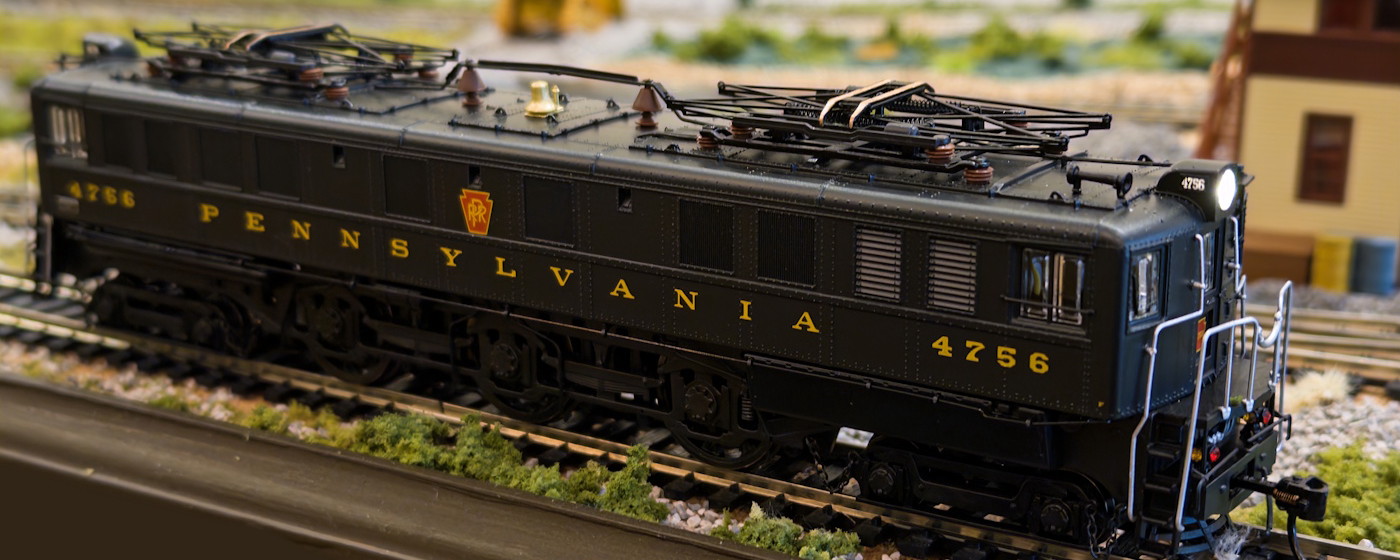
P5a Boxcab
PRR #4756
The P5 class locomotives were the Pennsylvania Railroad's first generation of heavy electric engines, generating 3,750 horsepower to operate on the 11,000-volt AC electrified lines. They had an AAR wheel arrangement of 2-C-2, or 2?Co2? in the UIC classification system — three pairs of driven wheels rigidly mounted to the locomotive, with a two-axle unpowered truck at each end. This is an equivalent to a 4-6-4. The PRR did not have any 4-6-4 steam locomotives, so the P5s were the only 4-6-4 type locomotives owned by the PRR. The term "Boxcab" refers to their utilitarian, square carbody, which housed the equipment and crew. The success of the P5 series directly paved the way for the iconic PRR GG1. The PRRs class P5 comprised 92 mixed-traffic electric locomotives constructed by the PRR, Westinghouse and General Electric. Although the original intention was that they work passenger trains, the success of the GG1 meant that the P5 class were mostly used on freight. The last of the class was withdrawn from service in April 1965. A single survivor, prototype #4700, is at the Museum of Transportation in St Louis, Missouri. The first P5s were built with box cabs. A grade crossing accident in which the crew were killed led to the substitution of a streamlined steeple type cab in later production, a design which was also applied to the GG1. Orders were placed for 90 production locomotives classified P5a due to minor changes from the prototypes. Production was split between General Electric and Westinghouse. The GE examples were assembled at GEs Erie, Pennsylvania facility, still a locomotive assembly plant today - while final assembly for the Westinghouse order was subcontracted to the Baldwin Locomotive Works.