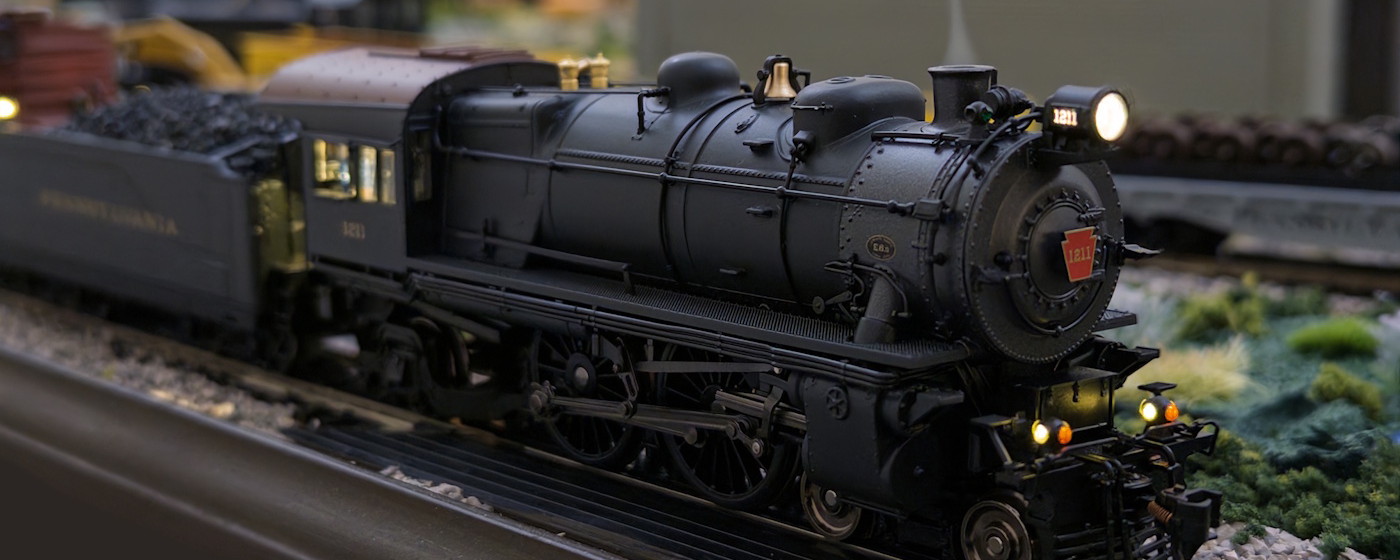
E6 4-4-2 Atlantic
PRR #1211
The PRR E6s was not the most numerous 4-4-2 "Atlantic" built by the railroad, but it was the final and most successful Atlantic on the PRR. The E6 was first designed in 1910, and in extensive testing, the E6 prototype consistently outperformed the K2. In 1912, the prototype was super-heated and also had her cylinders enlarged to 23". The locomotive became the E6s, and the PRR built 80 E6s locomotives in 1914. Most of the engines were assigned to New York - Philadelphia - Washington passenger service. They were excellent locomotives, with several lasting until the end of steam on the PRR. The E6s class was the last 4-4-2 Atlantic type locomotive built by the Pennsylvania Railroad, and it was known for its speed and power. The E6s featured a large, free-steaming boiler, outside Walschaert valve gear, and a cast steel trailing truck. It also had a superheater and enlarged cylinders. The E6s was capable of speeds exceeding 100 mph, although it lacked some later features like mechanical stokers and feedwater heaters. The E6s class was successful and lasted until the end of steam on the PRR, with some being leased to other railroads like the Long Island Rail Road. The most famous of the Pennsy's Atlantics was #460. She was the last one constructed, but more importantly #460 became known as the "Lindbergh Special" after racing an airplane! On June 11, 1927, the film of Charles Lindbergh's return to the US was rushed from Washington to New York City for media showings. The #460 was selected to carry the film by locomotive, and she pulled two cars behind her in which films of the Lone Eagle were being developed en route to NYC. #460 made the 216 mile trip in 175 minutes, at one time hitting 115 mph. Arriving with the film already developed, the locomotive won the race with the plane hands-down, and the PRR received considerable deserved publicity and acclaim.